The post is two sentences long and names everyone involved. “Revival” is described as a team-up of Kwahmi//studios, acethetics studios and PXL PPL — spelled here exactly as the studio wrote them — put together to produce five interior designs for INCEPT Ltd, whose own web address the post gives. The client is therefore the same practice behind the studio’s Deneese interiors a year later, and the two are kept as separate commissions: Deneese is described by the studio as a mock-up, while nothing here says that, and the rooms are different houses.
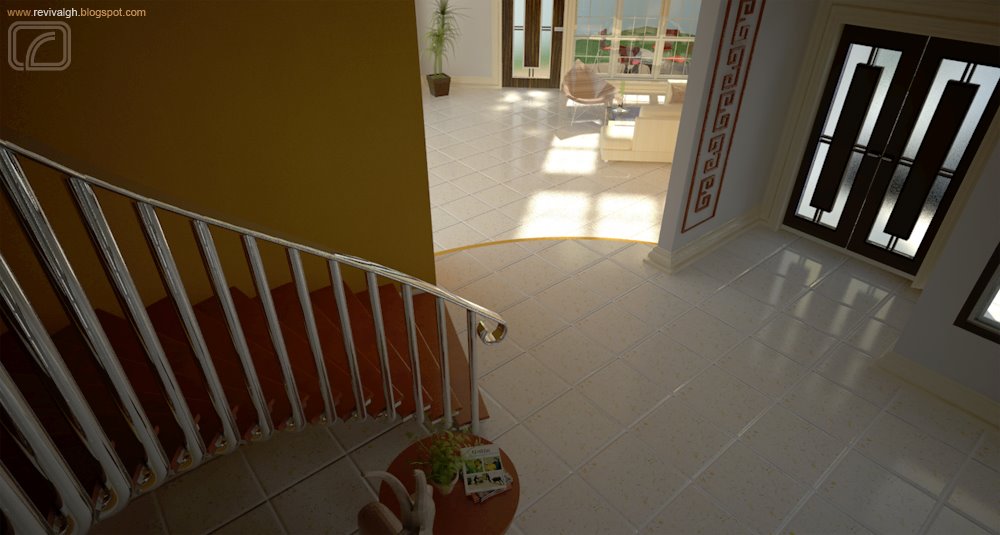
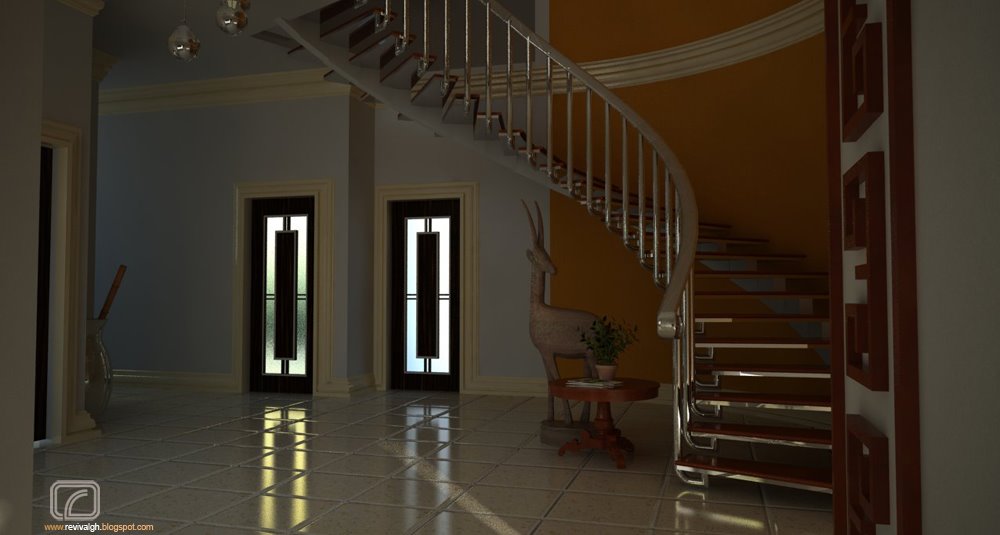
Two of the five frames are the same entrance hall from opposite ends, which is the set’s most informative pair. From the floor, a floating stair with timber treads and a chrome balustrade sweeps up a curved ochre wall past two tall glazed doors and a standing antelope sculpture; from the landing, the same balustrade is seen from above, with the hall opening onto a sunlit sitting area beyond. A red-and-cream Greek-key relief panel appears in both, and so does the round pedestal table, which is how the two are known to be one space.
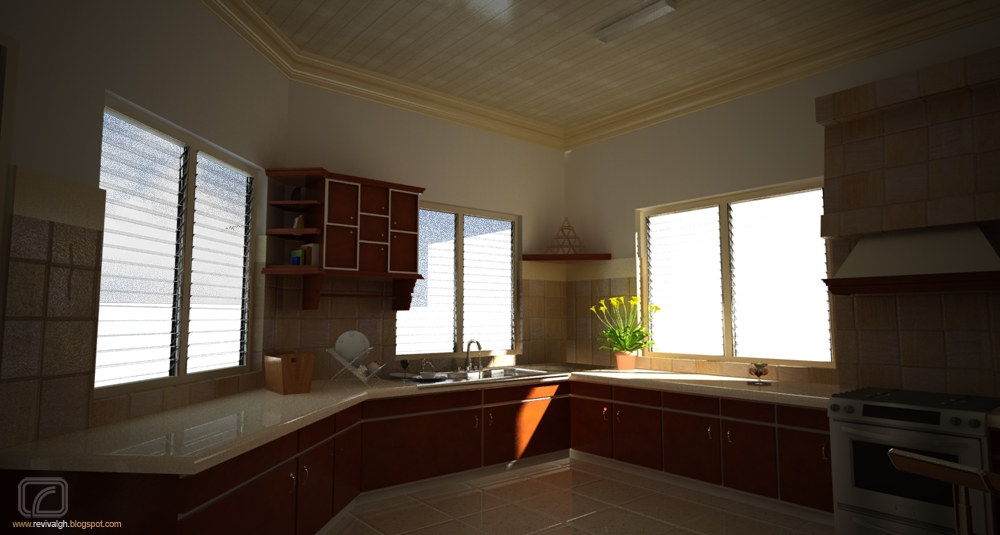
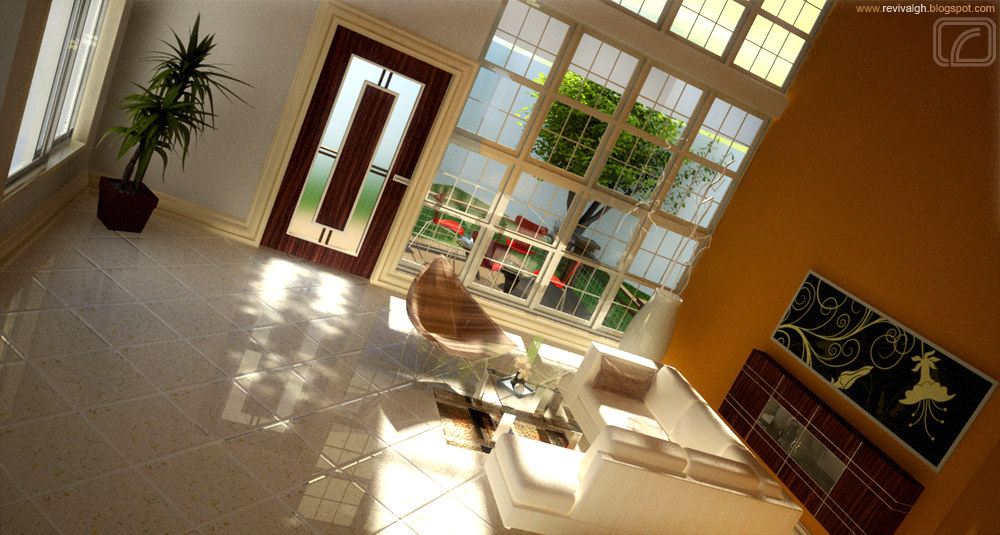
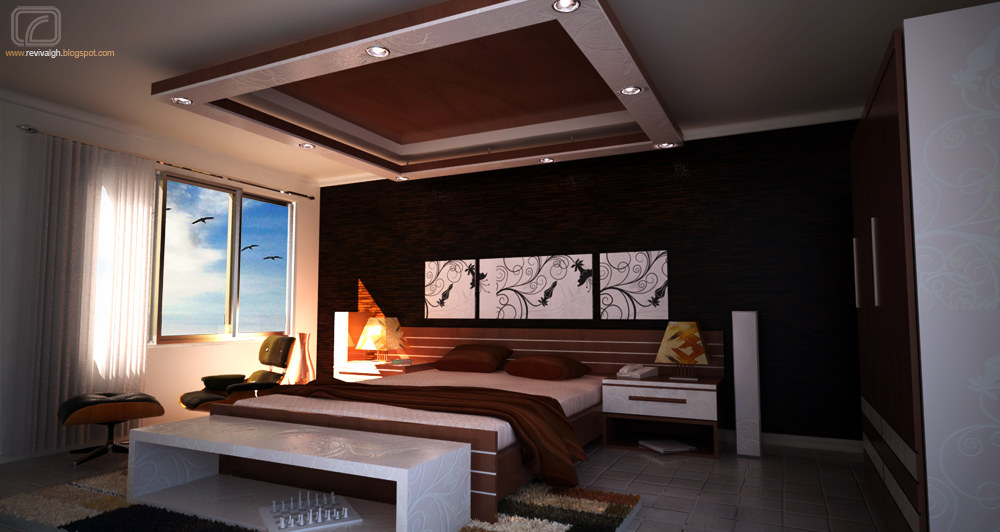
The other three are a kitchen, a living room and a bedroom, and they share one vocabulary rather than three: large pale speckled floor tiles, ochre and blue-grey walls, dark timber joinery, and pattern carried by printed panels — a three-part floral over the bed, a single wide floral in the living room, an etched floral on the wardrobe. The living room is deliberately canted, the only frame in the set photographed on a diagonal, which suggests it was the one the studio wanted to read as the most dramatic.
Software is known from the post’s own labels — SketchUp and V-Ray, alongside 3d visualization, architecture, homes, interiors and portfolio. No town, site or architect is named, so the listing carries the bare Ghana the studio’s other INCEPT work uses. The title is the post’s own, and the post never explains what Yakubu is: a person, a house name or a client’s project title are all equally supported by the record, so nothing is inferred from it.
The frames were published at 1000 pixels wide and the two darkest — the hall from the floor and from the landing — were uploaded as small JPEGs that compress better than any re-encode of them, so they are served here exactly as the studio uploaded them.
The source post is on blogspot — Yakubu interiors, 25 November 2008.