The gallery is titled LA MAISON - PHOTOGRAPHY and was published on 11 June 2015 as Behance gallery 27038289 from the studio’s RDVS. DESIGN account. What the studio wrote about it is a pointer and nothing else: the description reads “For more of our photography (RDVS_IMAGING) please go to - https://500px.com/RDVS_IMAGING”, which names the studio’s own photography handle but says nothing about the building, the place or the intent. There is no credits line and no licence attached, so this page carries no Team row, and unlike the Airport City gallery three weeks later it offers no statement about what the series was for. Six modules were published and all six are plated here.
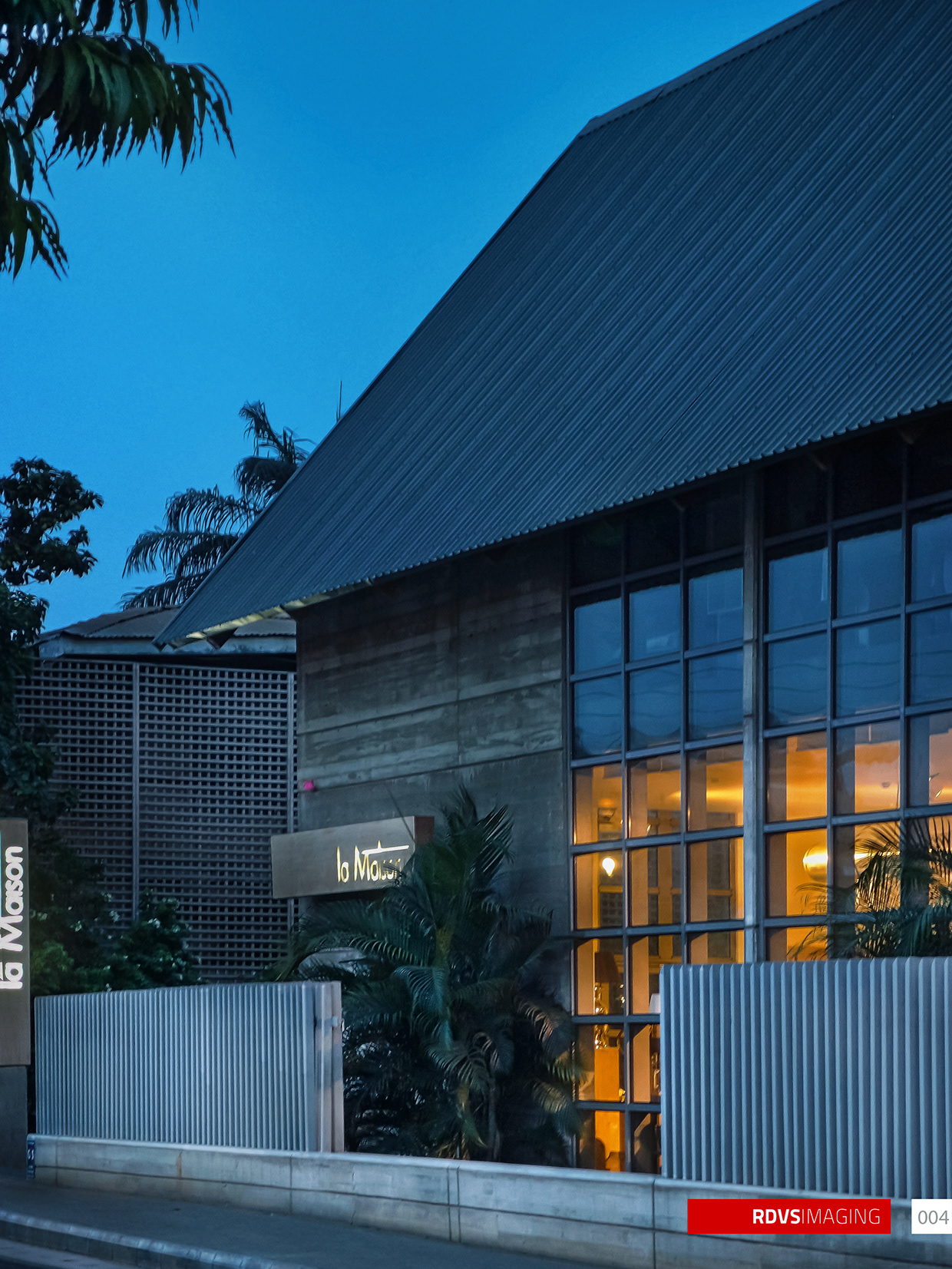
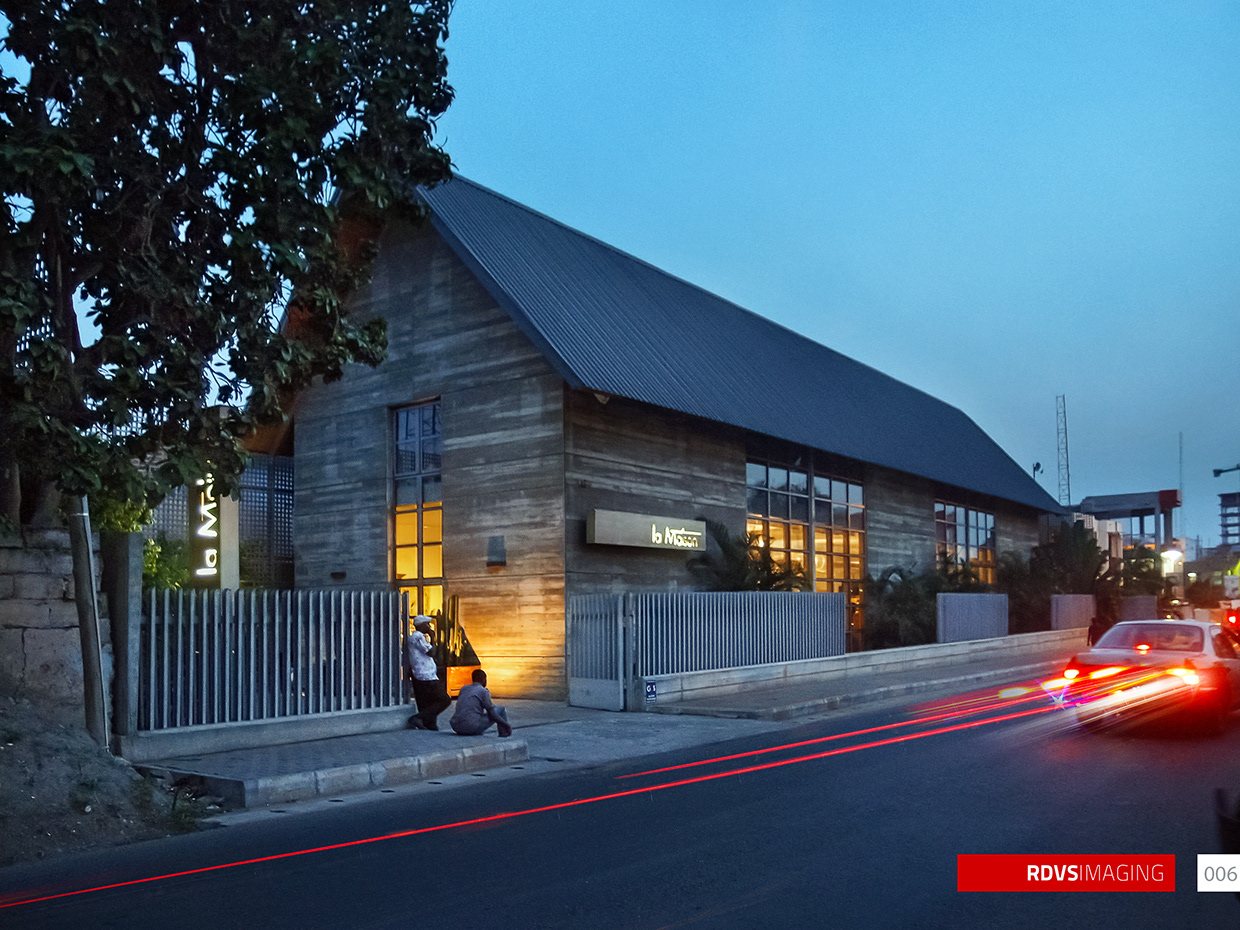
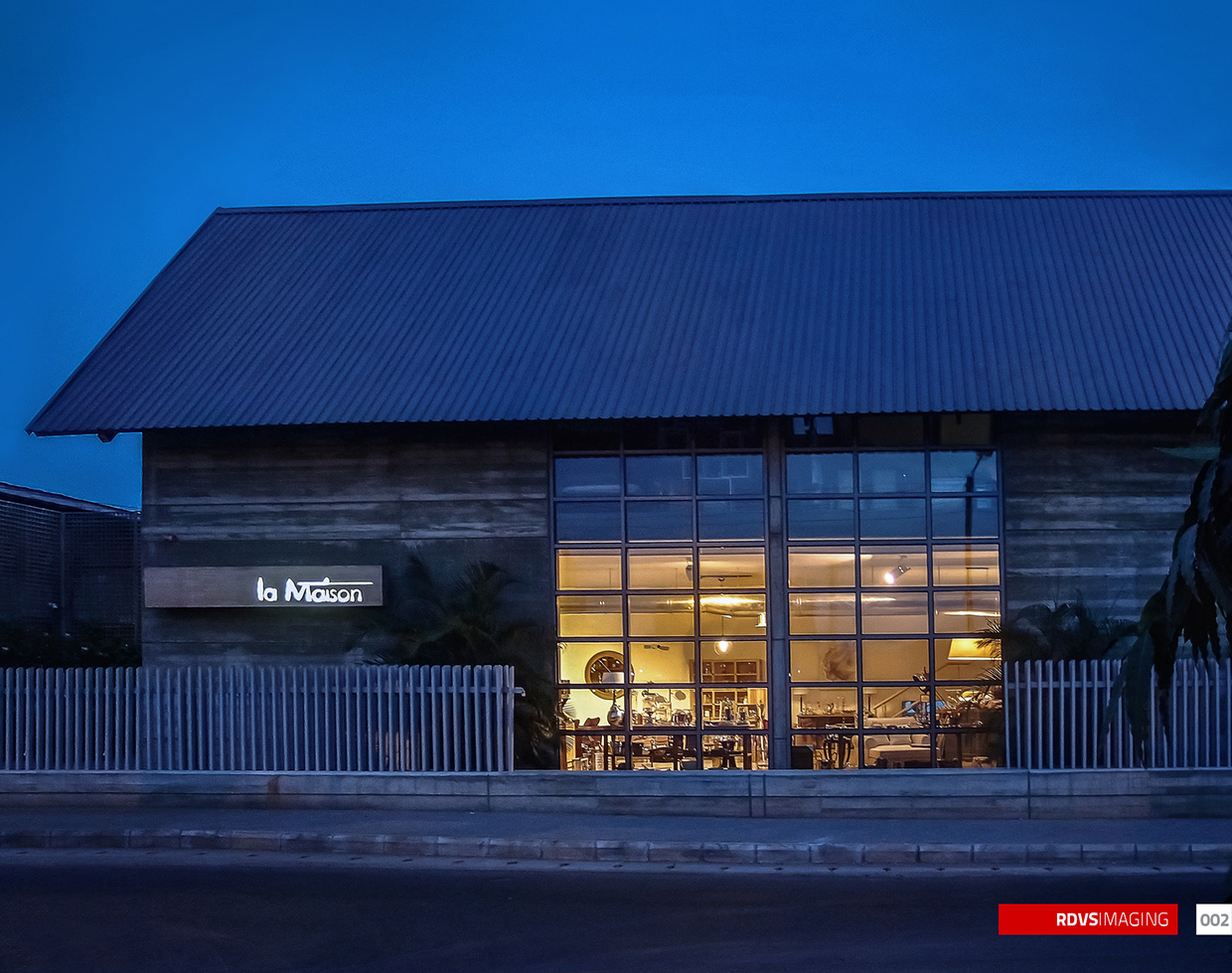
The subject is a single-storey commercial building fronting a road, and it is not a house despite a name that means one. Its walls are banded horizontally in an earth-toned, board-marked material — shuttered concrete or rammed earth — and they carry a steep corrugated steel gable roof that overhangs deeply on warm timber-lined rafters. A full-height grid of steel-framed glazing makes up most of the frontage, and what shows through it in plate one is a showroom: chairs, tables, a shaded lamp and a large round wall clock. The name sits on a dark blade sign at the wall, “la” in small letters before “Maison” in larger ones, lit white against the concrete, with a second vertical sign of the same words at the return in plate four.
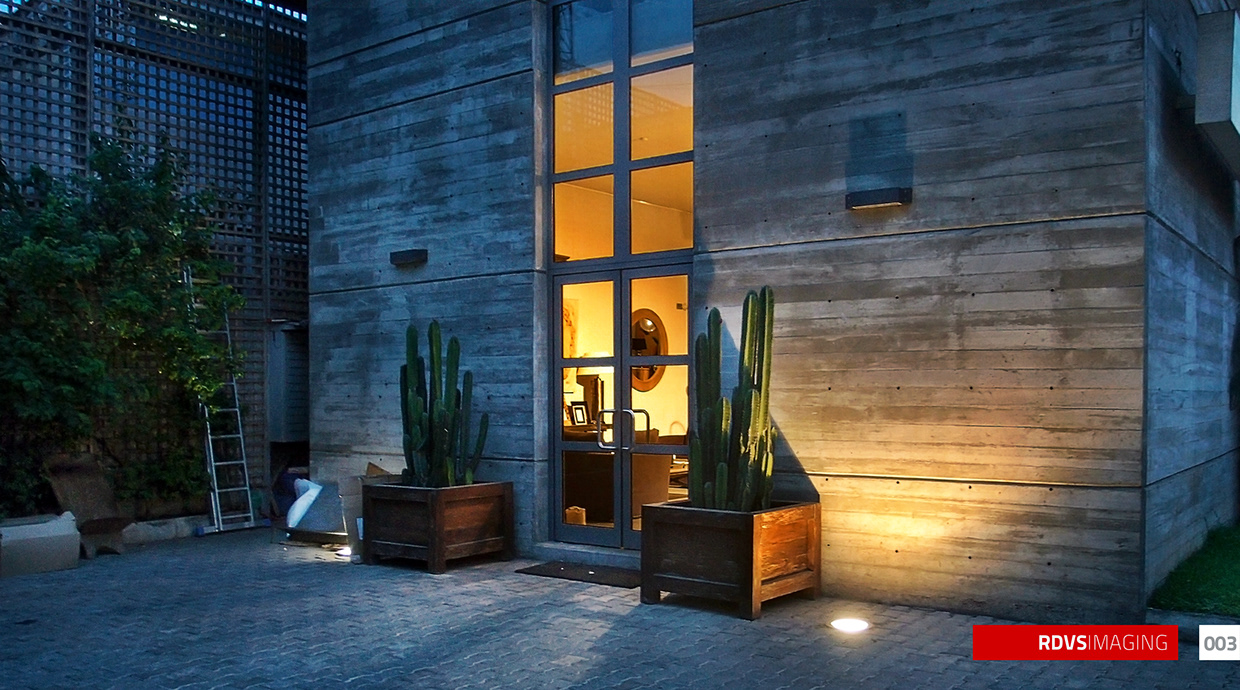
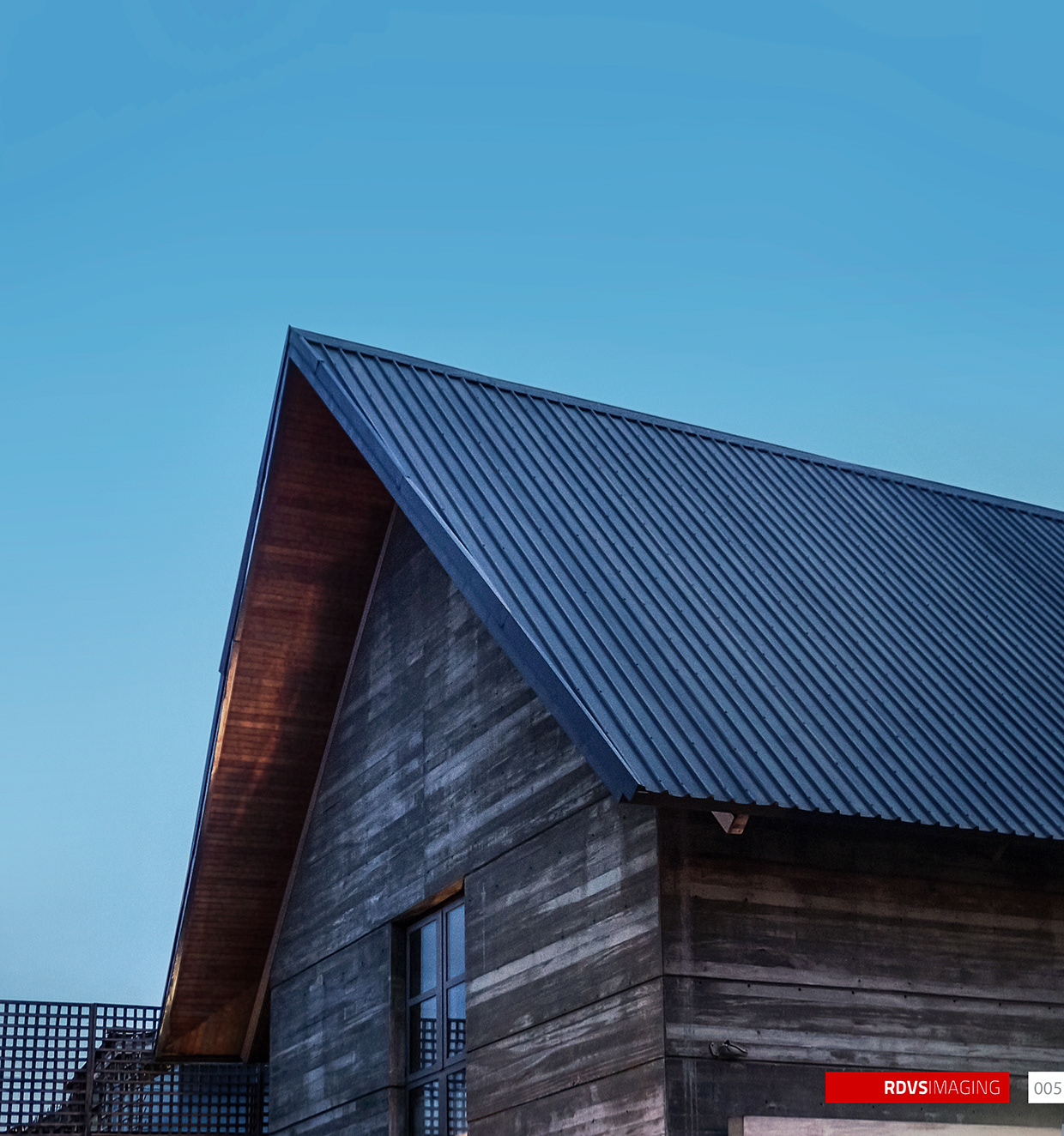
All six frames are dusk frames, and the treatment is consistent enough to read as one sitting: a saturated blue evening sky and cold street light held against the warm tungsten coming out of the glazing, so the building is lit from inside by its own contents. Plate two takes the courtyard corner, where an uplighter fans across the banded wall and a ground spot lights the herringbone paving between two timber planters of tall columnar cacti; plate five goes in close to the gable apex, where the roof planes meet at a hard angle and the timber soffit catches the last of the sky; and plate four is a long exposure, a car leaving the frame dragging three unbroken red tail-light streaks across the asphalt. Five of the six files still carry their camera metadata and all five name the same body, an Olympus with serial AAN510448, so the set was shot on one camera rather than assembled. Every frame wears the red RDVSIMAGING badge, the same handle the gallery description points at.
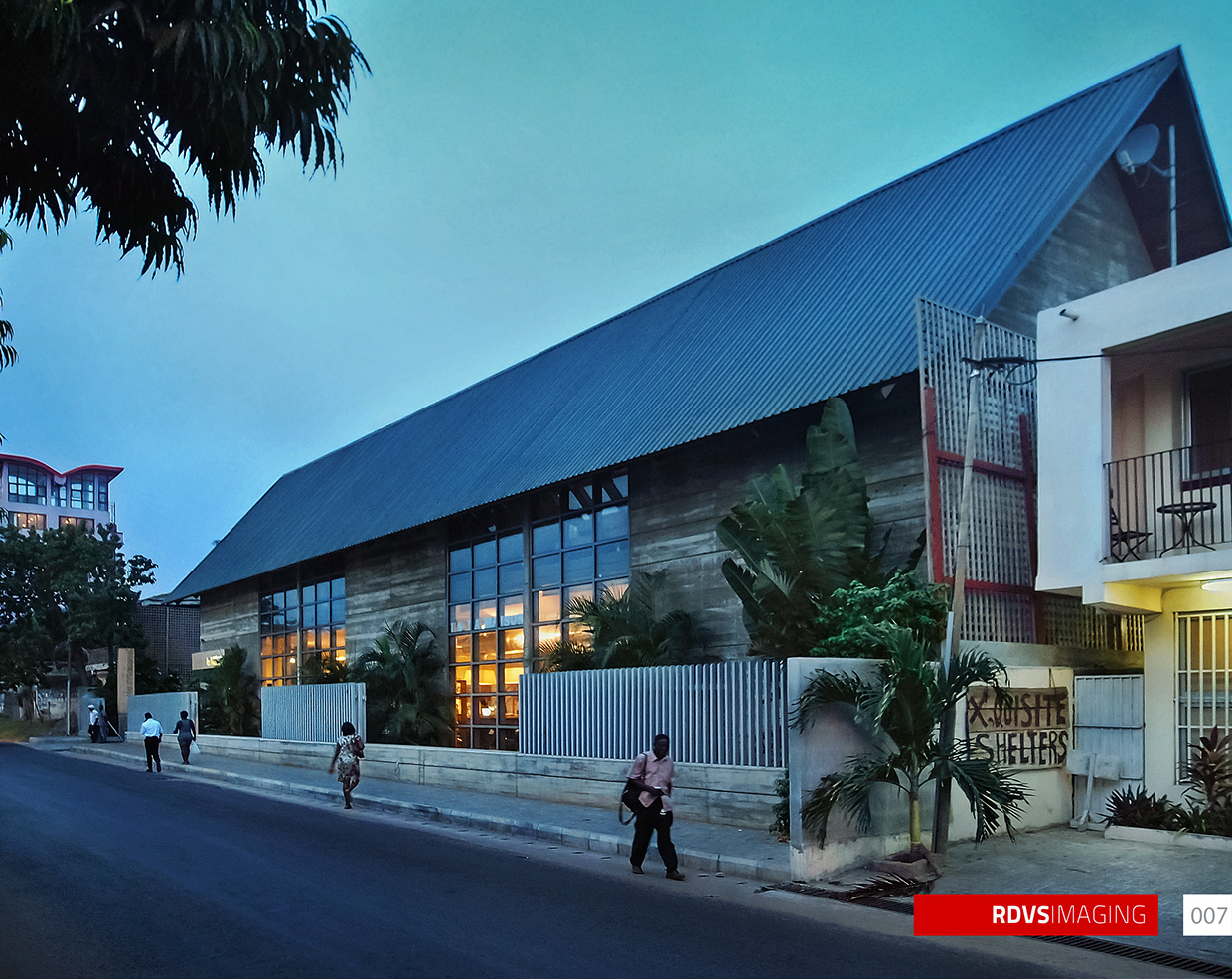
The sequence is an approach rather than a survey. Plate one sets the building square on from across the road, plate two steps into the courtyard, plate three tilts up to the eave corner, plate four pulls back for the whole three-quarter view with the traffic and two men at the gate, plate five closes in on the apex, and plate six walks out along the long elevation, where the pavement is in use — a man in a pink shirt crossing, a child, two more further off — and a neighbouring white two-storey house shows at the right with a hand-painted board reading XQUISITE SHELTERS, its leading letter lost at the edge of the sign. The corner tags give the studio’s own order, and it is not the display order: the six read 002, 003, 004, 006, 005, 007, so the traffic frame is numbered after the apex frame and the gallery shows them the other way round. The series also does not start at one. It starts at 002 because it is continuing a run begun elsewhere: the studio’s Osu Apartments presentation plate is tagged 001 in the same corner position with the same red bar, and all six La Maison files still hold a hidden text layer inside them reading OSU APARTMENTS, so this set was laid out on that deck’s template and numbered straight on from it. The page follows the gallery’s order and lets the tags say which plate was numbered first.
Two years separate the negative from the gallery, and the files carry both dates. Five of the six still hold a photoshop:DateCreated stamp, and all five read 20 March 2013, between 18:11:03 and 18:19:20 — one eight-minute dusk sitting, on a single Olympus body whose serial, AAN510448, every surviving frame names. Plate five keeps its raw reference too, P3202356.JPG, an in-camera Olympus name built from the same 20 March. This page therefore dates the work to 2013, which is when it was made; the 2015 dates are when it was finished and shown. Each file carries its own retouching history, and every save recorded in it falls in June 2015, in sessions running from the 4th to the 12th in Photoshop CS6, Photoshop CC 2014, Lightroom 5.0 and Camera Raw 8.0 on a machine set to UTC+01:00, which is Ghana time. The gallery’s own publish stamp, 11 June 2015 at 16:42 UTC, lands inside those sessions rather than at the end of them: plates one and two were last saved on 5 and 9 June, before it, and the other four carry final saves after it, running to the 12th — so what Behance serves today is a later revision of what went up, not the published set itself. The six modules then reached the CDN together on 1 November 2015 inside a twenty-two-minute window, the same sitting that uploaded West Hills Mall and Airport City, months after all three galleries were dated and two and a half years after these frames were exposed. The source is on Behance — LA MAISON - PHOTOGRAPHY, 11 June 2015.